


Tableau Catalog is a feature within Tableau that provides a comprehensive and unified view of your organization's data assets. It helps users discover and understand the data available to them, promoting better data governance and collaboration. Here are some key aspects of Tableau Catalog:
- Metadata Management: Tableau Catalog allows you to capture metadata about your data sources, such as data definitions, lineage, and usage information. This metadata is crucial for understanding the context and reliability of the data.
- Data Discovery: Users can easily search and discover relevant data sources within the organization. This promotes self-service analytics and reduces the time spent on searching for the right data.
- Impact Analysis: Tableau Catalog provides impact analysis capabilities, allowing users to understand how changes to a particular data source may affect downstream reports, dashboards, or analyses.
- Data Lineage: Understanding the lineage of data is essential for ensuring data quality and making informed decisions. Tableau Catalog visually represents the flow of data from its source to its usage, helping users trace the origin of the data.
- Usage Metrics: It provides insights into how frequently data sources are used, which can help organizations optimize their data infrastructure based on actual usage patterns.
- Collaboration: Users can add comments and annotations to data sources, fostering collaboration and knowledge-sharing among team members.
- Security and Governance: Tableau Catalog supports data governance by allowing administrators to define and enforce data security policies. This ensures that sensitive data is accessed only by authorized users.
- Integration with Tableau Server and Tableau Online: Tableau Catalog is integrated with Tableau Server and Tableau Online, providing a seamless experience for users working within the Tableau ecosystem.
Tableau Catalog integrates features like lineage and impact analysis, data discovery, data quality warnings, and search into Tableau applications (Figure 1).
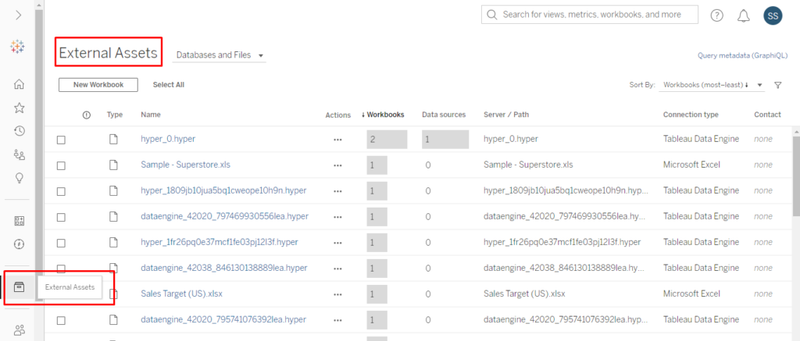
Tableau Catalog supports data lineage including databases, tables, flows, workbooks, sheets and owners (Figure 2).
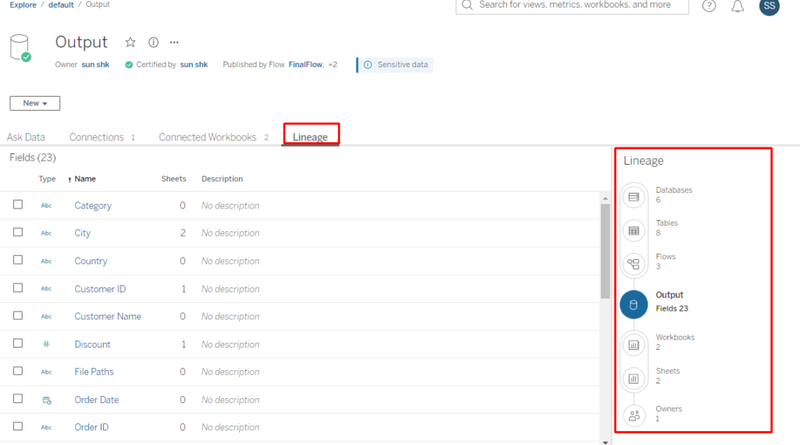
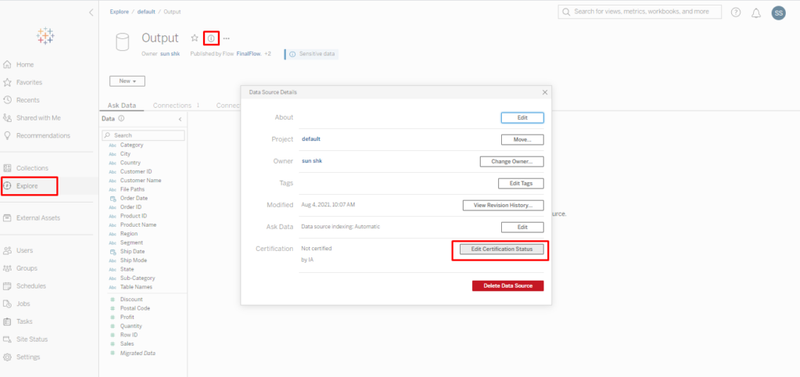
Tableau Catalog also supports data certification. After executing the certification process by data owners, a data source gets a green check mark on its icon. Certified data sources rank higher in search results and are added to recommended data sources (Figure 3).
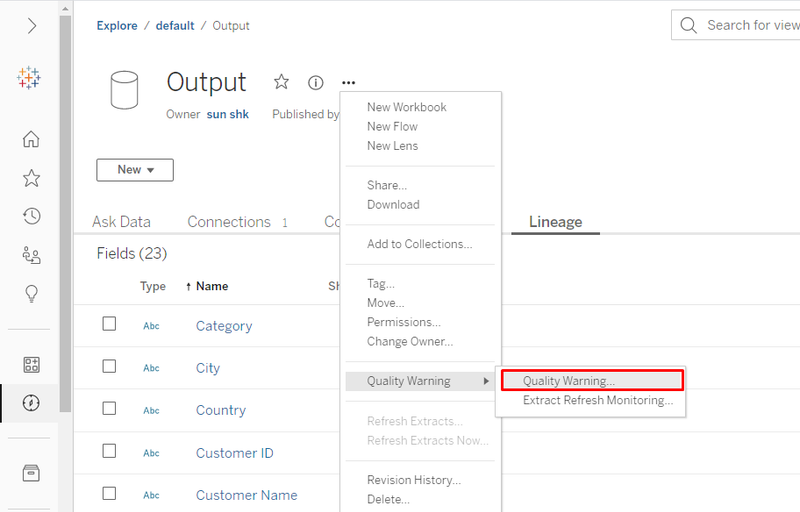
Users can also set Quality Warning messages on data assets such as data sources, databases, flows, and tables. Quality Warnings include Deprecated, Stale Data, Under Maintenance, and Sensitive data (Figure 4).
Overall, Tableau Catalog combined with Tableau Prep Conductor forms part of Tableau Data Management, which is fit-for-purpose for Tableau customers.